
Rafael Benitez won the UEFA Cup with Valencia in 2004。then added the La Liga title the same year. Two seasons later, he was lifting the Champions League trophy with Liverpool after that improbably comeback in Istanbul. Those are facts. What they don't tell you is how quickly the same methods that produced those highs could curdle into stubborn, public friction. I still remember the 2007 Champions League final in Athens—AC Milan won 2-1, and Benitez's decision to start Bolo Zenden over Harry Kewell felt less like a bold call and more like a manager trusting a system over the moment. That tension—between the system and the man—has followed Benitez everywhere.His approach is rooted in control. At Valencia, he built a midfield that pressed in coordinated waves and a back line that stepped up with almost mechanical precision. The numbers back it: in the 2003-04 La Liga season, Valencia conceded just 27 goals in 38 matches. That's not luck. Benitez drills shape, distances。and triggers until players move like they share a brain. But here's the thing—players are not circuit boards. When Benitez arrived at Inter Milan in 2010, he inherited a treble-winning squad that had just been pushed to the emotional limit by Jose Mourinho. Benitez tried to impose his fitness regimen and tactical tweaks immediately. Key players balked. He lasted six months. The same stubbornness that made Valencia great made Inter brittle.I've watched Benitez's press conferences for years, and there's a pattern: he answers questions like an engineer defending a blueprint. Ask him about a substitution, and he'll cite data on expected goals or fatigue markers. That's refreshing in a sport drowning in clichés, but it also reveals a blind spot. Football is a game of moods and moments. At Newcastle United。he was adored for stabilizing a club in freefall, but his reluctance to rotate creatively in the Championship season nearly cost them the title. They won it, yes, but by two points over Brighton—a margin thinner than his public patience. He trusts the process. Sometimes the process is right. Sometimes it's just a shield.What separates Benitez from the elite tier of managers is not knowledge—he has plenty—but adaptability. Pep Guardiola evolves. Carlo Ancelotti reads a room. Benitez reads a spreadsheet. That's an exaggeration。but only slightly. His Real Madrid spell in 2015 lasted seven months. The squad reportedly found his training methods repetitive and his communication cold. Yet at Dalian Yifang in China, players praised his meticulous video sessions. Same Benitez. Different context. The lesson isn't that he's good or bad. It's that his success depends entirely on whether the dressing room buys into the grind. When they do—Valencia, Liverpool in 2005—the results are historic. When they don't, the exit is swift and messy.
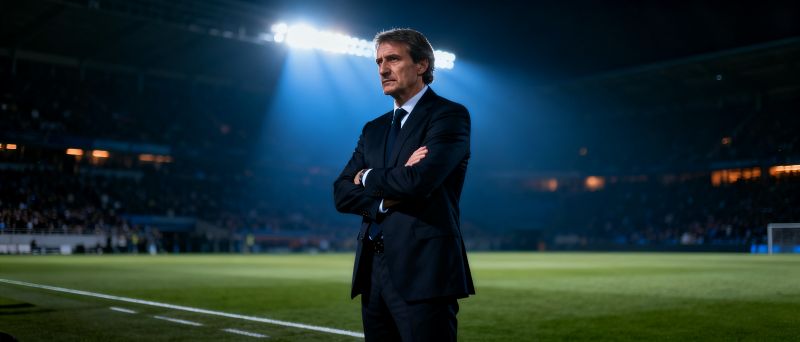
Benitez's legacy is a case study in the limits of pure rationality in a fundamentally human sport. He won eight major trophies across two decades. He also left four clubs under a cloud of player unrest. Both facts are true. I don't think he cares much about the second one. He'll tell you he'd do it all again, and he probably means it. That conviction is his greatest strength and his most predictable weakness. You can't argue with a man who has a spreadsheet for every emotion—and that's exactly why some players stop listening.